Table of Contents
- What Is Spinal Decompression?
- How Spinal Decompression Therapy Works
- What Conditions Can Spinal Decompression Treat?
- Why Do People Have Spinal Decompression Therapy?
- Does Spinal Decompression Work?
- Is Spinal Decompression Safe?
- Does Spinal Decompression Hurt?
- Spinal Decompression Benefits
- Spinal Decompression Risks
- How Long Does Spinal Decompression Last?
- What Is the Success Rate of Spinal Decompression?
- Spinal Decompression Surgery Cost
- Does Medicare Cover Spinal Decompression?
- Frequently Asked Questions
If back or neck pain is making everyday activities harder, you may have heard about spinal decompression as a non-surgical treatment option. But what does it actually involve, and could it be right for your condition?
When people start looking for conservative ways to manage these problems, one question often comes up: what is spinal decompression, and how can it help? Spinal decompression is a non-surgical approach that uses controlled stretching to reduce stress on certain areas of the spine. Depending on the condition, it may be used as part of a broader care plan to help manage pain and improve comfortable movement.
The goal isn’t simply to stretch your spine. Depending on your condition, spinal decompression therapy may help reduce mechanical stress, improve comfortable movement, and manage certain pain symptoms.
Research on spinal decompression and traction is mixed. Some studies suggest short-term improvements in pain and function for certain patients, while other research has found limited or inconsistent benefits.
In this blog, we’ll explain how spinal decompression therapy works, what conditions it may help, its potential benefits and risks, how much treatment may cost, Medicare coverage, and what you can expect during the process.
What Is Spinal Decompression?
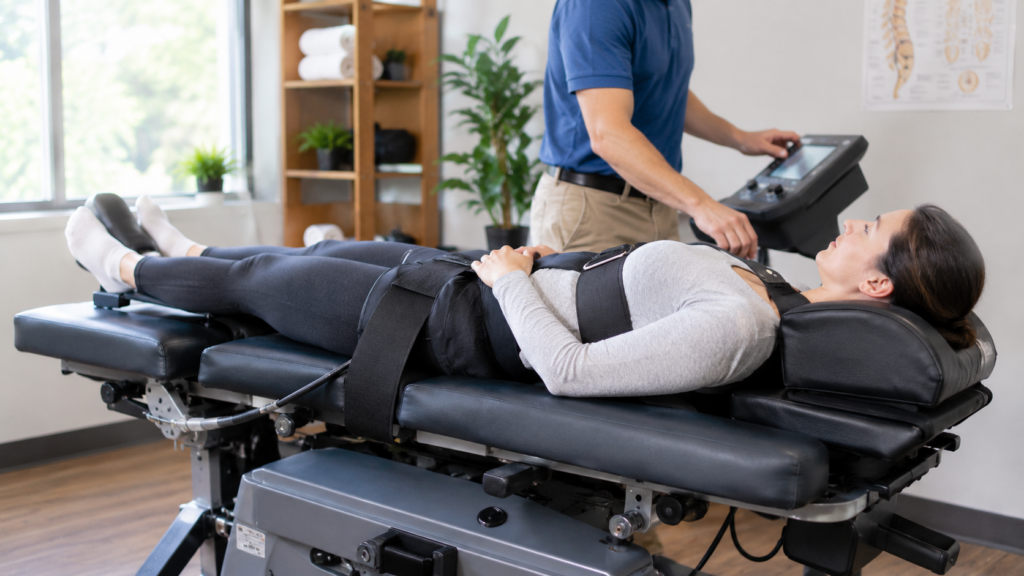
Spinal decompression is a treatment approach that uses controlled pulling or traction to reduce loading on certain areas of the spine. In non-surgical treatment, a person typically lies on a specialized table while a provider applies a carefully controlled force to the targeted spinal region.
The treatment is sometimes used for people with back or neck symptoms associated with disc problems, nerve irritation, or other mechanical conditions.
The basic idea is to temporarily change the forces acting on the spine. Depending on the equipment and protocol, the treatment may use repeated cycles of pulling and releasing rather than one continuous stretch.
It is important to separate non-surgical spinal decompression therapy from surgical spinal decompression.
- Non-surgical decompression: Uses traction or mechanical unloading without an operation.
- Surgical decompression: Involves an operation to remove or alter tissue that is compressing the spinal cord or nerve roots.
These are very different treatments. When people search for “spinal decompression,” they are often referring to the non-surgical approach.
Another important point is that spinal decompression is not a guaranteed way to “put a disc back into place.” Research has not established that traction consistently reduces herniated disc size. One systematic review found short-term improvements in pain and function among people with herniated discs, but did not find sufficient evidence for long-term benefits or a reduction in disc size.
How Spinal Decompression Therapy Works
During spinal decompression therapy, you usually lie on a specialized traction table. Depending on the area being treated, your pelvis or upper body may be stabilized while the table applies a controlled force.
A typical treatment may involve:
- Positioning you comfortably on the table.
- Securing the area being treated.
- Applying a controlled pulling force.
- Alternating traction and relaxation periods.
- Adjusting the treatment according to your condition and response.
The exact duration, force, frequency, and number of sessions can vary considerably. Research has found substantial differences between traction studies in treatment force, rhythm, session duration, and frequency.
This matters because “spinal decompression” is not one standardized treatment protocol. Different machines and providers may use different methods.
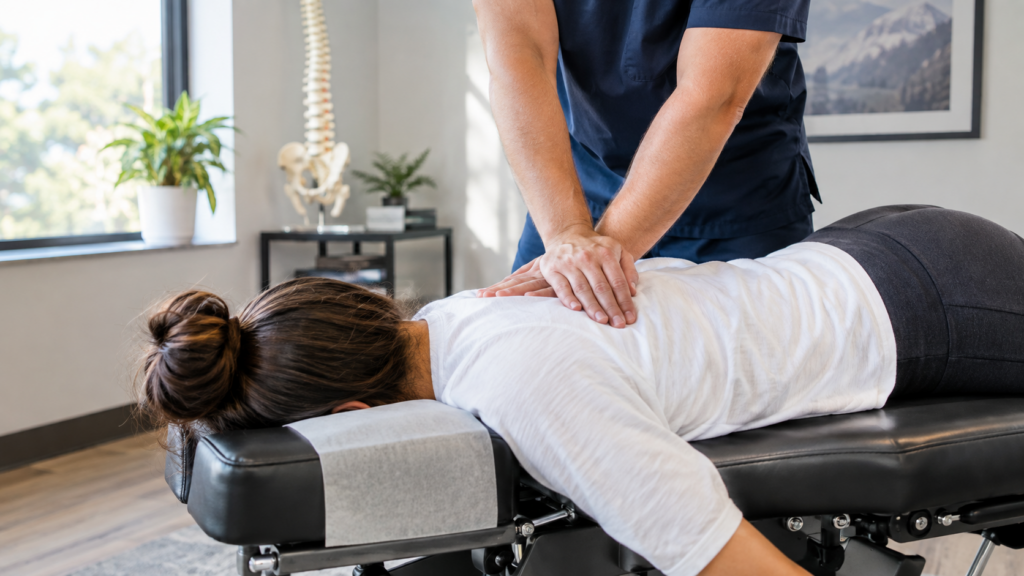
The treatment may be combined with other conservative care, such as therapeutic exercise, physiotherapy, manual therapy, or chiropractic care, depending on the patient’s needs.
At Armeli Chiropractic, spinal decompression is one of the clinic’s listed services, alongside chiropractic care, intersegmental traction, physiotherapy, myofascial release, trigger point therapy, and other conservative treatment options.
What Conditions Can Spinal Decompression Treat?
A provider may consider spinal decompression for certain conditions involving the discs, joints, or irritated nerves. However, the treatment should be selected after an appropriate clinical evaluation rather than based only on a diagnosis or MRI finding.
Conditions sometimes considered for traction-based treatment include:
- Herniated or bulging discs
- Certain cases of degenerative disc disease
- Low back pain with radiating symptoms
- Sciatica associated with lumbar nerve irritation
- Some forms of neck-related pain
- Certain mechanical or disc-related spinal conditions
Not every person with these conditions will benefit from decompression.
For example, having a disc bulge on an imaging scan does not automatically mean that the disc is causing your symptoms. A provider may consider your symptoms, physical examination, medical history, and imaging when appropriate before recommending treatment.
This is especially important when symptoms include progressive weakness, significant numbness, bowel or bladder changes, fever, unexplained weight loss, or other warning signs that may require medical evaluation.
Why Do People Have Spinal Decompression Therapy?
People may consider spinal decompression when persistent back or neck symptoms interfere with work, exercise, sleep, or everyday activities.
Some people are interested in a non-surgical option before considering more invasive treatment. Others may have already tried approaches such as exercise, physiotherapy, medication, or other conservative care.
The appeal of non-surgical decompression is that it does not involve an incision or general anesthesia. A person can receive the treatment in an outpatient setting and generally return to normal activities according to their provider’s recommendations.
However, decompression should not be viewed as a replacement for every other form of back care.
For many spinal conditions, a broader treatment plan may include strengthening, mobility work, activity modification, education, and other appropriate therapies.
The right question is not simply, “Can spinal decompression treat back pain?”
It is:
“Is spinal decompression appropriate for the specific cause of my symptoms?”
That distinction can help set realistic expectations.
Does Spinal Decompression Work?
Does spinal decompression work? The answer depends on the condition, treatment method, and individual patient.
Research on traction-based spinal decompression is mixed. A systematic review of mechanical traction found that people with herniated discs experienced greater short-term improvements in pain and function compared with sham or no traction, but the evidence did not establish long-term benefits.
Other systematic reviews have found more limited evidence. A Cochrane review concluded that traction used as a stand-alone treatment for broad groups of people with low back pain did not consistently outperform placebo, no treatment, or other conservative treatments.
More recent research continues to explore which patients may respond best. A 2025 systematic review of conservative treatments for lumbar disc herniation found potential benefits from traction, but also noted substantial differences among studies and limitations in making patient-specific recommendations.
So, spinal decompression may help some appropriately selected patients, particularly as part of a broader treatment plan, but it should not be presented as a guaranteed cure.
Is Spinal Decompression Safe?
Is spinal decompression safe? For many appropriately screened patients, non-surgical traction is generally considered a conservative treatment. However, safety depends on the patient’s medical history, diagnosis, symptoms, and the way treatment is applied.
A provider should review your health history and symptoms before starting treatment.
Some situations may require avoiding traction, modifying the treatment, or getting additional medical evaluation. Examples can include certain fractures, significant spinal instability, severe osteoporosis, infection, some tumors, or other serious spinal conditions.
People with previous spinal surgery or implanted hardware should also discuss their history with the treating provider before receiving traction.
Safety is not simply about the machine. Proper patient selection and appropriate treatment parameters are important.
If you develop new or worsening weakness, significant numbness, loss of coordination, or bowel or bladder changes, seek prompt medical evaluation rather than continuing routine treatment without assessment.
Does Spinal Decompression Hurt?
Does spinal decompression hurt? Most people describe non-surgical decompression as a gentle pulling or stretching sensation rather than sharp pain.
The experience can vary depending on the treatment area, condition, equipment, and individual sensitivity.
Some people may experience temporary soreness or stiffness after a session. If the treatment causes significant or worsening pain, tell the provider rather than assuming discomfort is something you simply need to tolerate.
A properly designed treatment should be adjusted to the patient’s condition and response.
Communication during treatment is important. Your provider can modify positioning, force, duration, or other treatment variables when appropriate.
Spinal Decompression Benefits
Potential spinal decompression benefits may include:
- Short-term reduction in certain types of back or leg pain
- Improved ability to move comfortably
- Reduced mechanical loading during treatment
- A non-surgical treatment option for selected patients
- Support for a broader rehabilitation plan
- No surgical incision or general anesthesia
Evidence suggests that some patients with lumbar disc herniation may experience short-term improvements in pain and function with traction.
However, benefits vary from person to person.
It is also important to avoid assuming that every benefit advertised online has been firmly established. For example, claims that decompression permanently restores disc height or consistently reverses disc degeneration are not supported by strong evidence.
The most useful goal is usually functional: helping an appropriate patient manage symptoms and improve movement as part of a complete care plan.
Spinal Decompression Risks
Like any treatment, spinal decompression has potential limitations and risks.
Possible issues can include:
- Temporary soreness or stiffness
- Temporary worsening of symptoms
- Muscle discomfort
- No meaningful improvement
- Symptoms returning after treatment
- Inappropriate treatment when an underlying condition has not been properly evaluated
One of the biggest concerns is not necessarily the traction itself but using it when another medical problem needs attention.
That is why a proper evaluation matters.
A provider should consider your symptoms, medical history, physical findings, and any relevant imaging before recommending a treatment approach.
Spinal decompression also should not delay medical care for serious symptoms. Severe or rapidly worsening neurological symptoms need appropriate medical assessment.
How Long Does Spinal Decompression Last?
How long does spinal decompression last? There are two ways to understand this question.
First, an individual treatment session may last anywhere from several minutes to around 30–45 minutes depending on the equipment and treatment plan.
Second, people often mean how long the results last.
There is no single answer. Some patients may experience short-term relief, while others may have longer-lasting improvement when decompression is combined with rehabilitation and other appropriate care.
Treatment plans also vary. Some providers may recommend multiple sessions over several weeks, while others may reassess sooner based on the patient’s response.
There is no scientifically established number of sessions that guarantees success for everyone.
Instead of choosing a fixed number of visits, a provider should monitor symptoms, function, and progress and adjust the plan when necessary.
What Is the Success Rate of Spinal Decompression?
What is the success rate of spinal decompression? There is no reliable single percentage that applies to every patient or every form of spinal decompression.
You may see websites claiming success rates of 70%, 80%, 90%, or higher. These figures should be interpreted carefully because studies differ in patient selection, equipment, treatment protocols, definitions of “success,” and follow-up periods.
For example, older research on motorized spinal decompression found that controlled trials did not consistently demonstrate a clear benefit, while uncontrolled studies reported much larger improvements. Researchers concluded that the evidence remained uncertain.
More recent research has found short-term benefits in some groups, particularly patients with lumbar disc herniation, but long-term effects remain less certain.
Therefore, rather than relying on a universal success rate, ask:
- What condition is being treated?
- What does the evidence say for that condition?
- What outcome are we trying to improve?
- How will progress be measured?
- What happens if symptoms do not improve?
These questions provide a more realistic picture than a single percentage.
Spinal Decompression Surgery Cost
Spinal decompression surgery cost varies widely because “decompression surgery” can refer to different procedures, such as laminectomy, laminotomy, foraminotomy, or procedures involving a herniated disc.
The final cost can depend on:
- Type of surgery
- Number of spinal levels treated
- Surgeon fees
- Hospital or facility fees
- Anesthesia
- Imaging and testing
- Insurance coverage
- Whether additional procedures or hardware are required
- Geographic location
For example, Medicare’s current Procedure Price Lookup provides different approved amounts for specific lumbar decompression procedures rather than one universal price. For a lumbar laminectomy/facetectomy/foraminotomy at an ambulatory surgical center, Medicare lists a national average approved amount of $4,760 for the referenced procedure code, with the patient portion depending on Medicare coverage and circumstances.
That figure should not be interpreted as the cash price for every patient or every spinal surgery.
Non-surgical spinal decompression is different from surgery and generally does not involve hospital, anesthesia, or surgical facility costs. The price of a non-surgical treatment plan varies by provider, location, number of sessions, and insurance benefits.
Does Medicare Cover Spinal Decompression?
Does Medicare cover spinal decompression? Coverage depends on what treatment is being provided and how it is billed.
Original Medicare Part B covers medically necessary chiropractic spinal manipulation for correction of a vertebral subluxation, subject to Medicare’s rules. Medicare specifically states that other services or tests ordered by a chiropractor, including X-rays and massage therapy, are not covered under that chiropractic benefit.
Non-surgical spinal decompression therapy is not the same as Medicare-covered chiropractic spinal manipulation. Therefore, patients should not assume that a decompression session will be covered simply because it is provided in a chiropractic office.
Medicare Advantage plans can have different benefits and rules.
Before starting treatment, ask your plan and provider:
- Is this specific service covered?
- Is prior authorization required?
- What diagnosis or billing code applies?
- What will I pay out of pocket?
- Is the provider participating with my plan?
Armeli Chiropractic’s website states that most insurance plans are accepted but specifically excludes Medicare from its new-patient special, so patients should contact the clinic directly about current payment and coverage details.
Spinal Decompression at Armeli Chiropractic in Eagan, MN
If you’re looking for spinal decompression in Eagan, Minnesota, Armeli Chiropractic lists Spinal Decompression as one of its services. The clinic also offers several other conservative care options that may be incorporated into an individualized treatment plan.
Services at Armeli Chiropractic
- Chiropractic Care
- Pediatric Care
- Prenatal Care
- Athlete Care
- Auto Injury Care
- Activator Method
- Intersegmental Traction
- Spinal X-Ray
- Spinal Decompression
- Kinesio Taping
- Myofascial Release
- Trigger Point Therapy
- Physiotherapy
- Work Injuries Care
- Webster Technique
- Wellness Care
The clinic also provides digital spinal X-rays in its Eagan office when appropriate, which can help the care team evaluate spinal findings and develop an appropriate treatment plan.
Dr. Andrew Armeli is the chiropractor at the practice. His professional background includes a chiropractic degree and Bachelor of Science in Human Biology from Northwestern Health Sciences University, National Board of Chiropractic Examiners certification, and additional training in whiplash, pre-sports physicals, and performance rehabilitation.
If you’re considering spinal decompression, an evaluation can help determine whether this treatment is appropriate for your symptoms and how it may fit with other conservative care options.
Armeli Chiropractic Location and Contact Information
Armeli Chiropractic
Location: Eagan, MN
Phone: +1 651-688-0736
Website: Chiropractor in Eagan, MN
Map: Armeli Chiropractic – Eagan, MN
Conclusion
So, what is spinal decompression? It is a non-surgical treatment approach that uses controlled traction or unloading to place a gentle pulling force on targeted areas of the spine.
For some patients, particularly those with certain disc-related conditions, spinal decompression may provide short-term improvements in pain and function. However, research is mixed, and it is not a guaranteed cure or replacement for every type of back or neck treatment.
The best approach starts with an accurate evaluation and realistic expectations. Your treatment plan may include decompression along with other conservative therapies based on your symptoms, physical findings, and goals.
If you’re experiencing persistent back or neck symptoms and want to know whether spinal decompression is appropriate for you, speak with a qualified healthcare provider about your options.
Frequently Asked Questions
Does spinal decompression really work?
Spinal decompression may help some appropriately selected patients, particularly with certain disc-related conditions. Research suggests potential short-term improvements in pain and function, but long-term benefits are less certain.
Is spinal decompression safe?
For appropriately screened patients, non-surgical spinal decompression is generally considered a conservative treatment. However, it is not appropriate for everyone, so a health history and clinical evaluation should come first.
What conditions can spinal decompression treat?
It may be considered for certain disc-related and nerve-related conditions, including some cases of herniated or bulging discs, sciatica, and mechanical back or neck pain. Treatment suitability depends on the individual diagnosis.
Does spinal decompression hurt?
Most patients experience a controlled pulling or stretching sensation rather than significant pain. Temporary soreness or stiffness can occur. Significant or worsening pain should be reported to the provider.
How many spinal decompression sessions are needed?
There is no universal number of sessions. Treatment frequency and duration depend on the condition, symptoms, response to care, and the provider’s treatment plan. Progress should be reassessed rather than assuming that a fixed number of sessions will work for everyone.
Author Bio
Dr. Andrew Armeli, DC
Dr. Andrew Armeli is a National Board Certified Chiropractor from Eagan, Minnesota, with advanced certifications in whiplash care, pre-sports physicals, and performance rehabilitation. He is dedicated to improving neurological function, musculoskeletal health, and patient wellness across the Twin Cities. Dr. Armeli focuses on helping patients improve physical function and pursue better overall wellness through individualized chiropractic care. His professional interests include supporting patients with injuries, performance goals, and musculoskeletal concerns. Outside of his professional work, Dr. Armeli enjoys disc golf, fishing, and spending quality time with his family and dog, Cora.